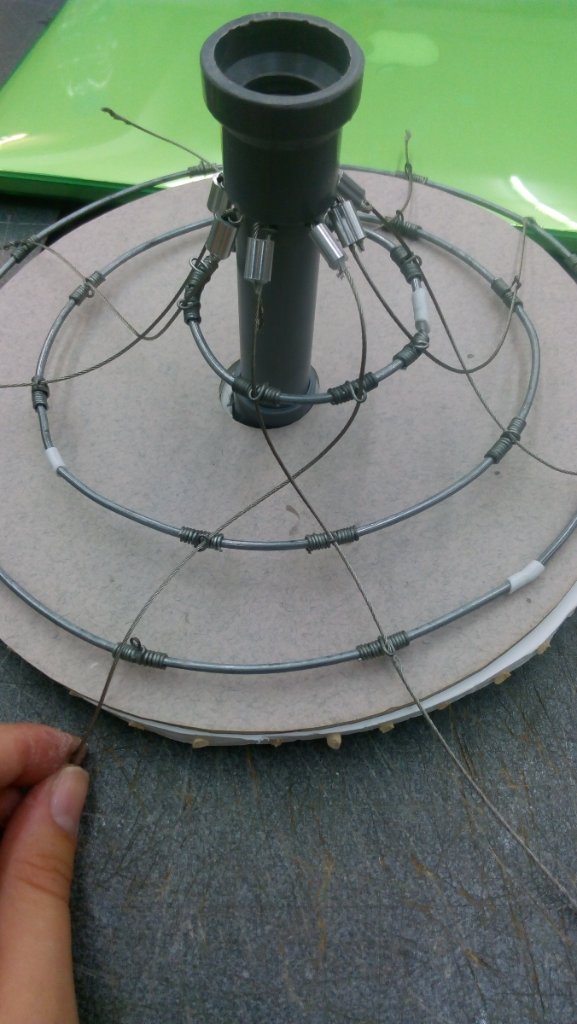
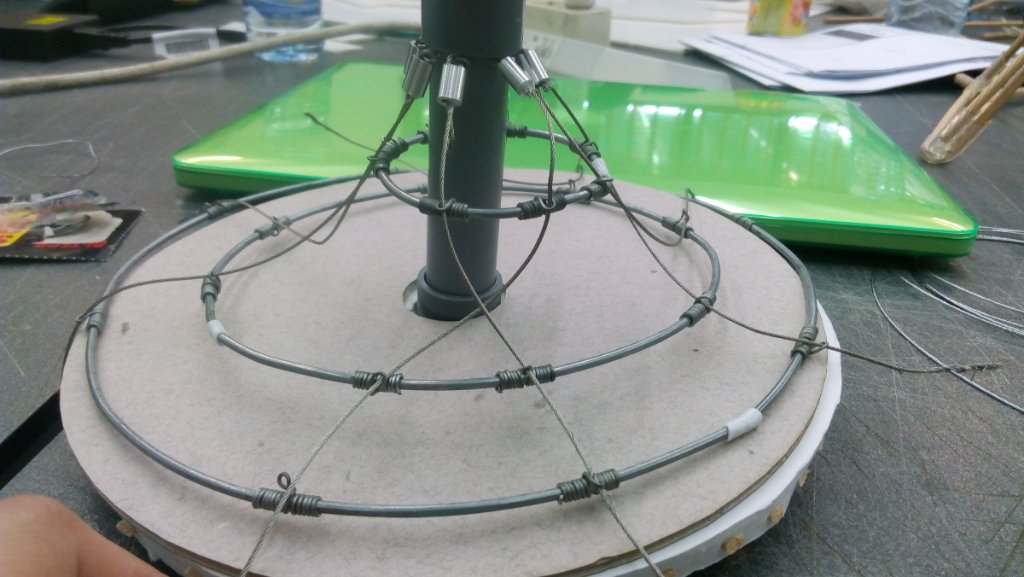
Dymaxion House
R. Buckminster Fuller - Wichita, Kansas, USA (1945-1946)
1. House Description
The Dymaxion House (1945-1946) represents a revolutionary approach to prefabricated housing. Designed as a circular dwelling suspended from a central mast, it embodied Fuller's vision of mass-produced, affordable, and efficient living spaces.
2. The Architect
R. Buckminster Fuller (1895-1983) - Architect, engineer, inventor, and philosopher. Known for geodesic domes, synergetic geometry, and comprehensive anticipatory design science.
3. Client, Brief & Aspirations
Originally designed for mass production to address post-WWII housing shortage. Client: American families seeking affordable, modern housing. Goal: Maximum efficiency, minimum material use.
4. Historical & Cultural Context
Post-WWII America (1945). Context: Housing crisis, industrial manufacturing capacity from war production, modernist movement, technological optimism, prefabrication experiments.
5. Site
Designed to be site-adaptable. Central mast allows 360° rotation for optimal solar orientation. Minimal foundation requirements. Can be deployed anywhere - universal solution.
6. Innovation
Central mast tension structure, aluminum construction, integrated mechanical core, rotating house for sun tracking, prefabricated components, tension-compression principles.
7. Material & Technology
Aircraft-grade aluminum, tension cables, central ventilator mast. Weight: 2,700kg. Technology: Aviation industry manufacturing adapted for housing.
8. Spatial Analysis
Radial plan: central core with radiating spaces. Sequence: peripheral entrance → circular living → central services. Massing: suspended disc. Solid/Void: transparent perimeter, solid core.
9. Legacy
Influenced prefabrication movement, sustainable design, and modular architecture. Disassembly by Jay Baldwin team (including Trip Hill) revealed Assembly Theory principles for architects.
10. Conclusion
The Dymaxion House achieved its innovation goals but not mass production. Its disassembly taught Assembly Theory: understanding construction through systematic deconstruction. Dimensional progression: Frequency → Line → Angle → Triangle → Tetrahedron.